


History
The Beginning
The protracted and often troubled construction of the Church of Santa Engrácia gave rise to the popular expression “Obras de Santa Engrácia” (Works of Santa Engrácia), which was popularly used to describe any seemingly interminable undertaking
16th-18th centuries – from the early parish...
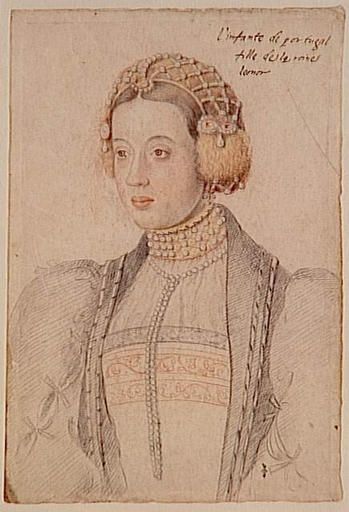
In the mid-16th century, Princess Maria, daughter of King Manuel I, petitioned the Pope to establish a new parish beyond the city walls, in the countryside of Santa Clara, where the Princess maintained her residence. The creation of the parish of Santa Engrácia was authorised in 1568 by a brief from Pius V, detaching it from the parish of Santo Estevão.
Work on the construction of the Church of Santa Engrácia, the seat of the new parish, began a few years later, possibly around 1570. It is recorded that when Princess Maria died in 1577, the church remained incomplete. In 1606, Nicolau de Frias assumed responsibility for the construction, with his son Teodósio de Frias succeeding him in 1621.
In 1630, the chancel of the church was desecrated, and the consecrated hosts kept in the tabernacle were stolen; an incident that came to be known as the Desacato. Simão Pires de Solis, a New Christian who had been observed in the area during the night, was accused of the crime and sentenced to death by burning. Executed in 1631, Solis maintained his innocence, swearing that the works of this church of Santa Engrácia would never be completed.
Following the Desacato, a crime that profoundly affected society at the time, the Brotherhood of the Slaves of the Blessed Sacrament was established, comprising one hundred nobles devoted to Desagravo; reparation for the heresy committed. One form of Desagravo was the construction of a new chancel to replace the desecrated space. This work, undertaken by the architect Mateus do Couto (nephew), began in 1632.
In what seemed a fulfilment of Simão Solis’ curse, the chancel collapsed in 1681 during a severe storm that struck Lisbon, bringing down part of the church walls. Deemed irreparable, the Brotherhood resolved to construct a new temple from the ground up. In the same year, the scheme proposed by master João Antunes was selected, and construction commenced on 31 August 1682 with the laying of the first stone in the presence of Prince Regent D. Pedro, the future King D. Pedro II.
According to the limited descriptions that have survived, the original church consisted of a single nave with the main entrance facing West. Within, there were five altars: the chancel contained the Blessed Sacrament and images of Santa Engrácia and São Lupércio (Engrácia’s cousin and one of eighteen martyred knights). The remaining altars featured images of Santa Isabel, São Gonçalo, São Fructuoso, and other “Portuguese” saints, in accordance with the wishes of Princess Maria.
... to the Baroque church
João Antunes’ design departed from the conventional floor plans of the period, employing a centralised Greek cross plan in which the four arms, of equal length, were connected externally by undulating walls punctuated at the corners by turrets. The scale, rhythm, and proportion of these elements conveyed a distinctly Italian influence, uncommon in Portuguese architecture.
At the time of João Antunes’ death in 1712, the church remained uncompleted, lacking both a roof and interior finishing. In 1713, under the proposal of P. A. du Verger, four buttresses were added to reinforce the main façade. Work progressed slowly under the direction of architect Manuel do Couto. King João V considered enlarging the church, deeming it too small, but this project did not come to fruition.
The Church of Santa Engrácia, constructed up to the level of the royal cornice, withstood the earthquake of 1755. Two years later, the Brotherhood commissioned the construction of a wooden roof to enclose the upper portion of the church. Between the appointment of brother of the Marquis of Pombal, Paulo de Carvalho e Mendonça, as inspector of works at Santa Engrácia in1767, and the year 1770, a new phase of construction commenced, yet the church continued incomplete, with the central dome still unfinished.
Military Occupation and National Place of Worship
During the years 1819 and 1825, surveys were conducted to assess the state of construction with a view to completing the building. However, neither of two subsequent solutions put forward in 1831 were implemented.
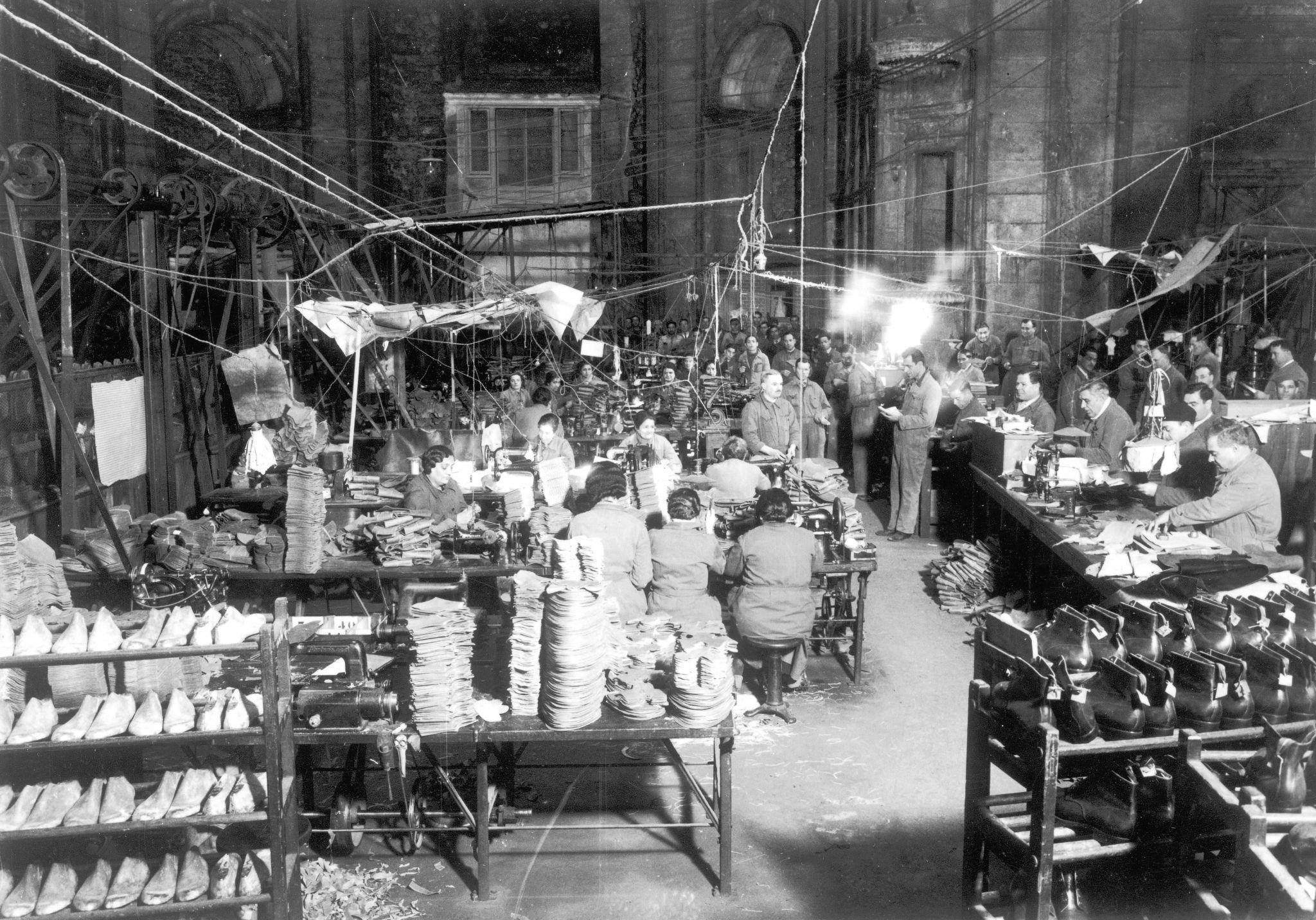
In 1834, following the dissolution of religious orders, the unfinished church was transferred to the Ministry of War, which then ceded it to the Directorate-General of Artillery. Following the construction of an iron and glass roof, the building was repurposed as a warehouse for scrap metal and foundry materials required by nearby military workshops.
It is known that the Brotherhood of the Slaves of the Blessed Sacrament continued to convene, making decisions regarding the works and organising the feasts of the Desagravo. On 5 April 1835, the parish, which had been based in the chapel of Nossa Senhora dos Paraíso since 1681, was transferred to the Church of Nossa Senhora da Conceição da Porciúncula which belonged to the Italian Capuchin Missionaries.
Parallel to the vicissitudes of the building works, the establishment of a National Pantheon in Portugal was being advocated by Passos Manuel and Almeida Garrett, an idea that was to achieve statutory approval in 1836. Despite differing opinions over the form of this pantheon, in 1837 consideration was given to the possibility of adapting the unfinished Church of Santa Engrácia to the purpose, a proposal publicly championed in 1896 by Ramalho Ortigão. The architect Ventura Terra, then president of the Superior Council of National Monuments, presented a proposal for the completion of the monument in 1906. Despite the progressive deterioration of the building and its continued use as a storage facility, the Church of Santa Engrácia was classified as a National Monument in 1910.
Yet, even with this important designation, on 15 June 1910 a large portion of the building was transferred to the Central Uniform Depot and converted into a military footwear factory. Notwithstanding that, by a statute of 26 April 1916, the Church of Santa Engrácia was sanctioned for conversion into the National Pantheon, the military occupation was to continue up to May 1954 when control of the edifice was transferred to the Ministry of Finance.
In 1934, a commission was established to oversee the completion of the monument with the aim of converting it into the National Pantheon. Nonetheless, doubts concerning the project and, indeed, the very concept of a national pantheon, delayed progress despite the submission of new proposals, including projects by Bernardino Coelho (1936), and António and Ruy do Couto (1939), the latter incorporating the construction of a crypt reminiscent of the French Pantheon.
Conceptual doubts (to finish or restore) persisted over the completion of the building to the extent that proposals submitted in 1953 by Luís Benavente, then director of the Monuments Service of the Directorate-General for National Buildings and Monuments, also ended up being rejected.
In 1956, a renewed effort was made to complete the building. The Minister of Public Works, Arantes e Oliveira, issued a call for proposals. Seven projects were submitted, with that of Luis Amoroso Lopes, architect of the Directorate-General for National Buildings and Monuments, emerging as the winner.
Completion of the Church of Santa Engrácia – 1960s
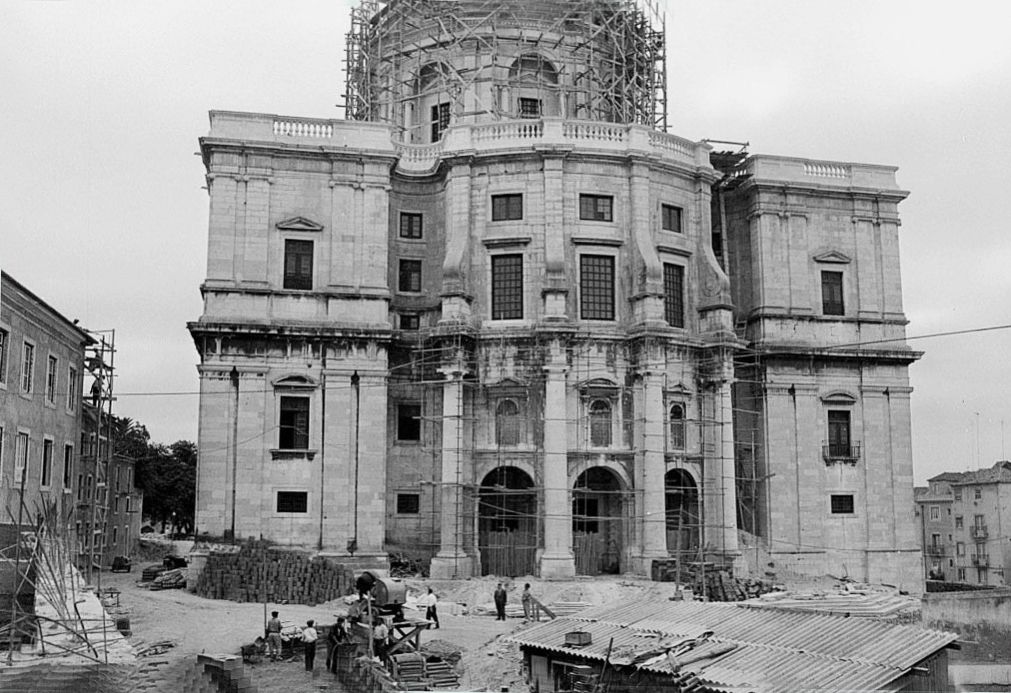
In 1960, work finally commenced to complete the Church of Santa Engrácia. The estimated duration for the works was ten years, beginning with studies to ensure the stability and structural integrity of the building. Despite certain technical and artistic challenges that modulated the pace of construction, progress continued under the direction of João Vaz Martins.
A construction site was established with specialized workers, notably stonemasons. The models used for molds, and the study of execution plans, were overseen by João Laertes. Interior studies, such as the design of the cenotaphs, under the responsibility of Gonçalo Lyster Franco, also allowed for the recovery and integration of an 18th-century organ originating from the Lisbon Cathedral.
The Advisory Committee for the Installation of the National Pantheon in Santa Engrácia determined that six cenotaphs—three at each end of the transept—be erected to honour the nation’s distinguished figures. To the tomb chambers, it was decided to transfer the remains of six individuals previously interred in the Chapter House of the Monastery of the Jerónimos, which had until then served as a pantheon.
In accordance with the simplicity of the design, the sculptural programme for the monument’s empty niches was entrusted to António Duarte, responsible for the statues on the main façade, and Leopoldo de Almeida, responsible for the interior statues. Statues of Portuguese saints were created to reflect the intention attributed to Infanta D. Maria to celebrate saints of national origin.
An 18th-century organ was installed in the chancel, reutilising a Baroque instrument from Lisbon Cathedral, valued both historically and artistically, and rescued from neglect.
A significant urban development project surrounding the monument was carried out under the supervision of Lisbon City Council. Designed by Carlos Chambers Ramos, the plan encompassed the excavation and clearance of the site, culminating in its monumental enhancement through the construction of a grand frontal staircase.
Work on the monument, initially scheduled for completion in the late 1960s, was brought forward to coincide with the 40th anniversary of the Revolution, and the Santa Engrácia project was duly completed on 7 December 1966, marking the conclusion of a long and turbulent process that had given rise to the popular expression “Obras de Santa Engrácia” (Works of Santa Engrácia), used to describe any undertaking with no end in sight.
Honourees
The Advisory Committee for the works of Santa Engrácia, established in late 1965 and chaired by historian Damião Peres, was entrusted with the responsibility of determining which national figures would be honoured in the newly created National Pantheon.
It was decided that cenotaphs (memorials without the physical presence of remains) would be placed in the central nave, occupying the niches of the side chapels, and honouring Luís de Camões, Vasco da Gama, D. Nuno Álvares Pereira, Afonso de Albuquerque, Pedro Álvares Cabral, and Infante D. Henrique.
The tombs placed in the corners of the building were transferred from the chapter house of the Monastery of the Jerónimos. These belonged to the former Presidents of the Republic Teófilo Braga, Sidónio Pais, and Óscar Carmona, as well as the writers Almeida Garrett, João de Deus, and Guerra Junqueiro.
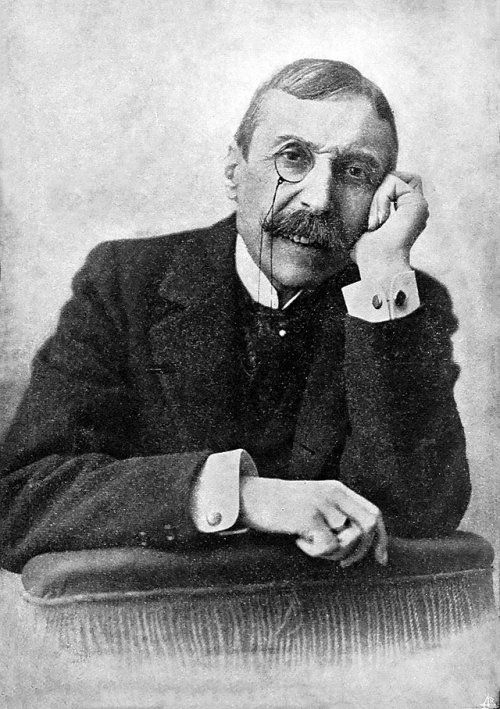
Since its inauguration, the National Pantheon has received the mortal remains of General Humberto Delgado (1990), the singer Amália Rodrigues (2001), the first President of the Republic, Manuel de Arriaga (2004), the writer Aquilino Ribeiro (2007), the writer Sophia de Mello Breyner Andresen (2014), the footballer Eusébio da Silva Ferreira (2015), and the writer Eça de Queiroz (2025).
In 2021, the tribute to diplomat Aristides de Sousa Mendes inaugurated the practice of commemorating individuals with a memorial plaque.